

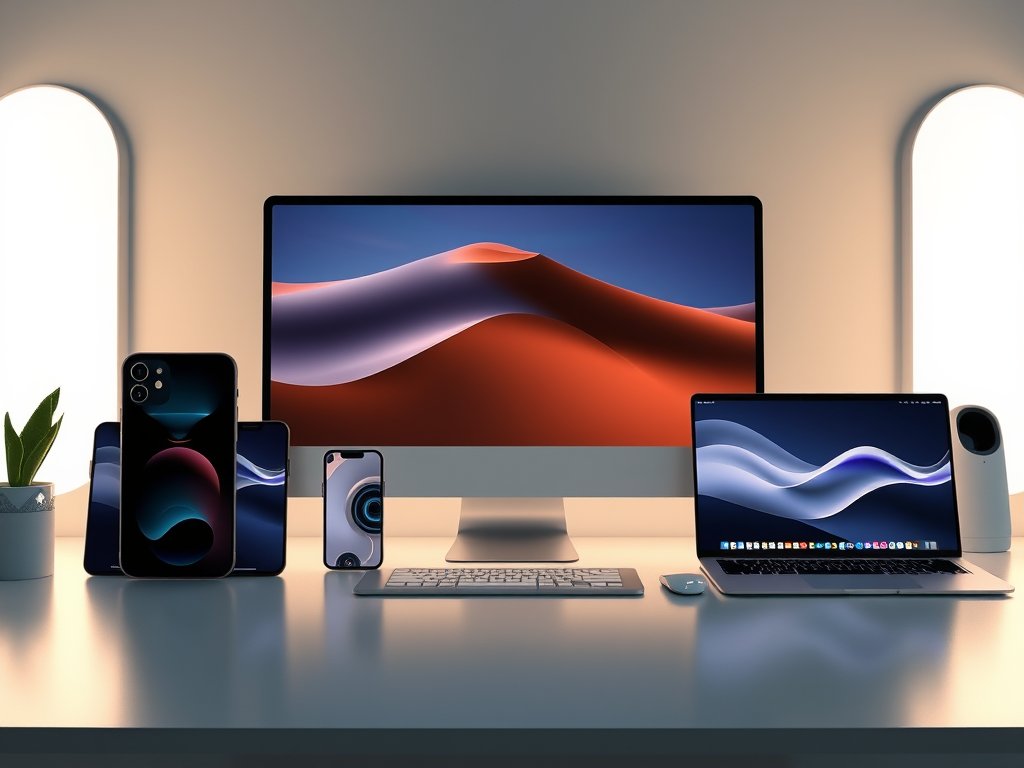
Over the last six months, Apple has radically reshaped its ecosystem. From the September 2025 release of the iPhone 17 family to the highly anticipated March 2026 spring launch—which introduced the entry-level MacBook Neo, the M5-powered MacBooks, and the iPhone 17e—the current lineup is a masterclass in market segmentation.
Here is a deep dive into the latest Apple products, highlighting the most genuinely useful tools and calling out the features that fall short of the marketing hype.
1. The iPhone Lineup: Diversification at its Peak
The current smartphone lineup is the most fractured Apple has ever presented, headlined by the standard iPhone 17, the ultra-thin iPhone Air, the iPhone 17 Pro max, and the budget-friendly iPhone 17e.
The Most Useful Features
- A19 and A19 Pro Chips: The jump to the A19 architecture brings massive leaps in on-device AI processing. The fluidity of the new personalized Siri and contextual awareness in iOS 26 finally matches the hardware’s capability, making voice commands and text generation genuinely useful rather than gimmicky.
- ProMotion Across the Board: The base iPhone 17 now features a 6.3-inch Super Retina XDR display with ProMotion (120Hz). This is a massive win for standard consumers who no longer have to buy a “Pro” model just to get smooth scrolling and responsive touch inputs.
- The Value of the iPhone 17e: The new entry-level 17e retains the powerful A19 chip and full MagSafe support. It is an absolute powerhouse for basic users who want access to modern accessories and long-term software support without breaking the bank.
The Less Useful / Overrated Features
- iPhone Air’s Battery Compromises: The iPhone Air is an engineering marvel and the thinnest iPhone ever made. However, physics cannot be cheated. To achieve this form factor, the battery capacity is severely restricted. Apple heavily markets the “iPhone Air MagSafe Battery” accessory, which is effectively a necessary band-aid for users who will struggle to get a full day of heavy use.
- The iPhone 17e’s Single Camera: While the 17e is fast, it only features a single rear camera. In 2026, the lack of an ultra-wide or telephoto lens on a premium-branded smartphone is a noticeable bottleneck. Zoomed-in photos degrade in quality almost immediately.
iPhone Lineup Comparison
| Feature | iPhone 17e | iPhone 17 | iPhone Air | iPhone 17 Pro |
| Target Audience | Budget / Entry | Mainstream | Style / Portability | Power Users |
| Processor | A19 | A19 | A19 Pro | A19 Pro |
| Display Size | 6.1-inch | 6.3-inch | 6.5-inch | 6.3-inch / 6.9-inch |
| Rear Cameras | Single Lens | Dual Fusion (48MP) | Dual Lens | Triple Lens |
| ProMotion (120Hz) | No | Yes | Yes | Yes |
2. The Mac Family: The Era of M5 and the MacBook Neo
Apple’s March 2026 event completely shifted the Mac paradigm. We now have the M5 chip powering the higher-end machines, but the most disruptive product is undoubtedly the MacBook Neo.
The Most Useful Features
- MacBook Neo’s Price-to-Performance: Starting at a highly affordable price point, the new MacBook Neo uses the A18 Pro chip (originally designed for the iPhone 16 Pro series) rather than an M-series chip. For students and casual users who only need word processing, web browsing, and media consumption, this colorful laptop (available in Silver, Blush, Citrus, and Indigo) is a brilliant entry point into macOS Tahoe.
- M5 Pro & M5 Max AI Workloads: The 14-inch and 16-inch MacBook Pros now feature the M5, M5 Pro, and M5 Max chips. The next-generation GPU with a Neural Accelerator in each core offers a huge boost to heavy AI workloads. Compiling complex code, rendering 3D environments, and running local language models are incredibly fast.
- 24-Hour Battery on MacBook Pro: The efficiency of the M5 architecture allows the 14-inch MacBook Pro to hit up to 24 hours of battery life under specific workloads, virtually eliminating battery anxiety for traveling professionals.
The Less Useful / Overrated Features
- MacBook Neo for Power Users: The A18 Pro chip in a laptop chassis is great for battery life, but it lacks the thermal headroom and architectural bandwidth of the M-series. Users expecting to do 4K video editing or complex logic sessions will hit a processing wall very quickly.
- Incremental Base M5 Upgrades: If you own an M4 MacBook Air, the jump to the M5 MacBook Air is negligible for daily tasks. The M5 is an evolution, not a revolution, for standard computing.
3. Wearables: Apple Watch and Vision Pro
The wearable segment is anchored by the Apple Watch Series 11, SE 3, and Ultra 3, alongside a necessary refresh to the Apple Vision Pro headset.
The Most Useful Features
- Watch Series 11 Health Tracking: The integration of wrist temperature sensing and robust blood oxygen/health monitoring algorithms makes the Series 11 a true medical companion. Furthermore, the display is now 2x more scratch-resistant, which is a highly practical everyday improvement.
- Apple Watch Ultra 3 Battery: Offering up to 42 hours of battery life, the Ultra 3 remains the undisputed champion for extreme athletes or those who simply hate charging their watch every single night.
- Vision Pro’s Dual Knit Band & M5 Chip: The original Vision Pro was notoriously heavy. The late 2025 refresh brought the M5 chip (improving rendering performance and battery life) and the much-needed Dual Knit Band. This soft, cushioned band fundamentally fixes the ergonomic nightmare of the first generation’s weight distribution.
The Less Useful / Overrated Features
- Apple Watch SE 3’s Missing Sensors: The SE 3 is a great value, but it still omits ECG capabilities. For a device heavily marketed around health and safety, withholding these features feels like an artificial tiering strategy to push users toward the Series 11.
- visionOS 26 Ecosystem: Despite the hardware upgrades, the Vision Pro still struggles with a lack of compelling, ground-breaking spatial applications. The $3,000+ hardware has vastly outpaced the software ecosystem’s utility for the average consumer.
4. Audio: AirPods Pro 3 and AirPods Max 2
Apple’s audio lineup has finally completely unified around USB-C, with the AirPods Pro 3 launching in late 2025 and the AirPods Max 2 arriving in early 2026.
The Most Useful Features
- Conversation Awareness on AirPods Max 2: The Max 2 finally received the H2 chip. This enables Conversation Awareness, which seamlessly lowers your media volume and enhances the voices of people speaking to you. It is a massive quality-of-life improvement for busy office environments.
- AirPods Pro 3 Heart Rate Sensing: The AirPods Pro 3 now feature built-in heart rate sensors. For users who prefer not to wear an Apple Watch during intense workouts, getting accurate biometric data straight from the ear canal is a brilliant, invisible integration of health technology.
The Less Useful / Overrated Features
- AirPods Max 2 Design Stagnation: The AirPods Max 2 retained the exact same design and heavy weight as the original. Furthermore, the notorious bra-like “Smart Case” that offers almost zero physical protection to the earcups was not redesigned.
- Pro 3 Active Noise Cancellation Claims: While Apple claims “up to 2x stronger” ANC on the Pro 3 compared to older models, real-world acoustic physics dictates a ceiling. The perceived difference in loud environments (like airplane cabins) is only marginal when compared directly to the Pro 2.
5. iPads and Displays: Power Without Purpose?
The M4 iPad Air and M5 iPad Pro, alongside the newly launched Studio Display XDR, round out the 2026 ecosystem.
The Most Useful Features
- Studio Display XDR: This is a triumph. By incorporating a 27-inch 5K mini-LED screen with 120Hz ProMotion, Apple has finally given Mac users a pro-level monitor that doesn’t cost as much as a used car. The built-in 12MP Center Stage camera and 6-speaker array make it the ultimate docking station for MacBook users.
- M5 iPad Pro Hardware: The hardware is flawless. The Ultra Retina XDR display paired with the M5 chip makes this the most beautiful, thin, and powerful tablet currently on the market.
The Less Useful / Overrated Features
- iPadOS 26 on M5: This remains Apple’s biggest paradox. Putting an M5 chip in an iPad Pro is like putting a rocket engine in a golf cart. iPadOS 26 still lacks true desktop-class window management and file system freedom. The M5 is entirely bottlenecked by the mobile software, making the iPad Pro a very expensive luxury rather than a true Mac replacement.
Desktop & Tablet Display Innovations
| Product | Chip | Display Tech | Key Utility | Drawback |
| iPad Air (2026) | M4 | Liquid Retina (60Hz) | Great mid-tier tablet performance | Lacks ProMotion |
| iPad Pro (2025) | M5 | Ultra Retina XDR (OLED) | Best-in-class media consumption | Hamstrung by iPadOS |
| Studio Display XDR | A19 | 5K mini-LED (120Hz) | Flawless Mac desktop integration | High upfront cost |
Final Verdict
Apple’s 2026 lineup successfully addresses massive, long-standing gaps in the market. Products like the MacBook Neo and Studio Display XDR offer highly useful, targeted tools for specific user bases, while the integration of the A19 and M5 chips solidifies Apple’s dominance in silicon efficiency and local AI processing.
However, the relentless pursuit of form over function continues to rear its head, most notably with the battery constraints of the ultra-thin iPhone Air, the stagnant design of the AirPods Max 2, and the frustratingly limited software holding back the M5 iPad Pro.

Recent Comments